 By
By Recirculating Aquaculture Systems (RAS) are gaining traction among small-scale fish farmers in Ghana. These systems allow farmers to produce fish efficiently while using less water and space compared to traditional pond farming. But with various options on the market, which RAS setups make sense for small-scale farmers aiming for profitability without overcomplicating operations? Here’s a practical guide.
1. Tank-Based RAS Systems
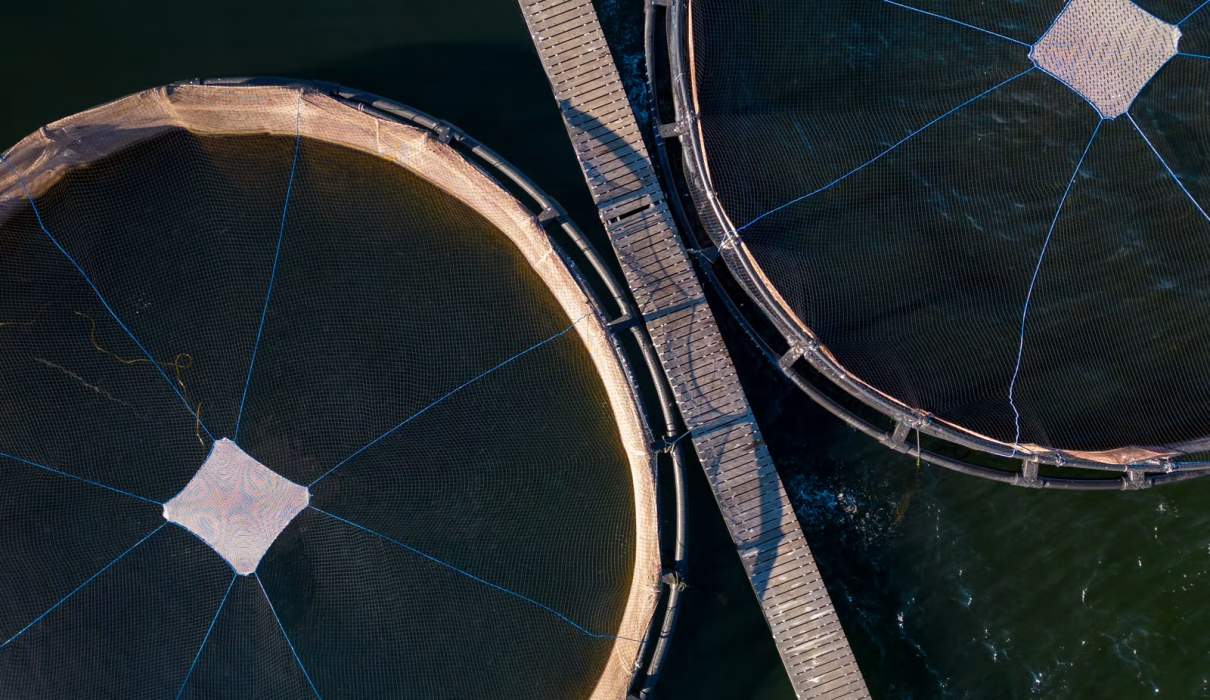
Tank-based RAS setups are among the most popular for small-scale farmers. Fish are raised in large tanks with water that is continuously filtered and recirculated. The advantage here is control: farmers can monitor water quality, feed, and fish health much more closely than in pond systems.
While tank systems can be expensive to set up initially, they are highly adaptable to urban or peri-urban spaces where land is limited. Creative farmers sometimes repurpose old water tanks or shipping containers to cut costs. Mordecai Farms, for example, experimented with modular tanks that can be expanded as production scales, allowing a small farmer to start modestly and gradually increase capacity.
One of the challenges to note is maintenance. Tanks require careful monitoring of oxygen levels and filtration systems. A lapse in system checks can quickly impact fish health. For small-scale farmers, learning to balance operational efficiency with daily checks is key to sustainable yields.
2. Biofloc RAS Systems
Biofloc technology is a system where beneficial microbes are cultivated alongside fish to improve water quality and reduce feed costs. Essentially, fish feed is partly replaced by these naturally occurring microorganisms. This makes it both environmentally friendly and cost-efficient for farmers.
Biofloc is ideal for species like tilapia, which thrive in dense systems. Small-scale farmers often see higher growth rates because the microbial environment supplements their diet. Creative ideas include integrating vegetable hydroponics above the tanks to utilize the nutrient-rich water for plant growth — effectively combining fish and crop production in a small space.
However, biofloc systems require careful management of carbon-to-nitrogen ratios. Without proper monitoring, water quality can deteriorate quickly. This is where training and hands-on experience become critical. Farmers who invest in understanding microbial dynamics often see substantial returns over time.
3. Hybrid Pond-RAS Systems
Hybrid systems combine traditional earthen ponds with recirculation technology. Water is filtered and partially recirculated, allowing farmers to enjoy some benefits of RAS without the full infrastructure cost. It’s a great bridge system for farmers transitioning from conventional pond farming.
The benefit here is that farmers can experiment with RAS principles, such as oxygenation and filtration, while still using existing pond infrastructure. Mordecai Farms has successfully piloted hybrid setups where small ponds connect to a modular filtration unit, allowing them to stock fish at higher densities without compromising water quality.
Challenges include balancing flow and filtration. Ponds naturally introduce debris and fluctuating temperatures that can affect fish health if not carefully managed. Still, for farmers who are just starting with RAS, this hybrid approach can reduce financial risk while improving yields.
4. Stacked or Vertical Tank Systems
For farmers with very limited land, vertical or stacked tank RAS systems offer a creative solution. These involve placing tanks above one another, with water flowing downward through successive filtration stages. The design maximizes production per square meter, making it ideal for urban farming.
This system can be highly lucrative if managed correctly, but small-scale farmers need to ensure that water pressure, oxygenation, and waste removal are carefully calibrated. Combining this approach with solar-powered aeration can reduce operational costs and make the setup more sustainable.
A potential drawback is the technical complexity. Farmers must understand water flow dynamics and filtration cycles. Yet, for those willing to experiment and learn, stacked systems can significantly increase production without requiring new land acquisition.
5. Integrated Multi-Trophic Aquaculture (IMTA) RAS
Integrated Multi-Trophic Aquaculture is a more advanced approach where fish are raised alongside other species, such as shrimp, tilapia, or certain aquatic plants, that utilize waste products efficiently. This creates a mini-ecosystem where nothing goes to waste.
For small-scale Ghanaian farmers, IMTA systems can be an experimental but profitable venture. Farmers can diversify outputs, reducing market risk. For instance, some pilot farmers grow catfish in tandem with leafy vegetables, using nutrient-rich water to fertilize crops while also producing a high-value fish product. The challenge with IMTA is the higher learning curve and coordination needed among different species. Even so, for farmers aiming to maximize land use and create innovative farm-to-market stories, this approach can distinguish their brand and attract buyers willing to pay premium prices.
RAS systems offer incredible potential for small-scale fish farmers in Ghana. The choice depends on space, budget, and willingness to manage operational complexity. Whether you start with a simple tank-based system or experiment with integrated multi-trophic setups, understanding the trade-offs and creative possibilities will determine your long-term success. For farmers ready to innovate, systems like those piloted by Mordecai Farms demonstrate that small-scale RAS can be both practical and profitable, provided attention to water quality, fish health, and operational efficiency.