 By
By Catfish farming has quietly become one of the most profitable agribusiness ventures in Ghana. What used to be a small-scale backyard activity is now evolving into a structured, income-generating enterprise for young entrepreneurs, farmers, and investors.
With rising demand for protein, increasing food costs, and growing interest in sustainable local food production, catfish farming offers a rare combination of affordability, scalability, and consistent market demand. However, like any serious business, success depends on strategy, knowledge, and execution.
1. Constant Market Demand Across All Income Levels
Catfish is one of the most consumed fish types in Ghana. From local chop bars and food vendors to restaurants, hotels, households, and event caterers, demand remains consistently high. Unlike luxury products that depend on disposable income, catfish cuts across income brackets, making it a stable commodity even in uncertain economic periods.
The steady demand means farmers are rarely stuck with unsold stock. Smoked catfish, fresh live catfish, and processed catfish products all have ready markets. Entrepreneurs who build supply relationships with food vendors, supermarkets, restaurants, and online food brands can create dependable income streams.
2. Fast Growth Cycle and Quick Turnover
One of the biggest advantages of catfish farming is its short production cycle. Catfish can reach market size within three to six months, depending on feeding, water quality, and management practices. This fast turnaround allows farmers to harvest multiple times within a year, unlike crops that take longer growing periods.
This rapid growth rate makes catfish farming attractive for entrepreneurs seeking quicker returns on investment. With proper feeding plans and pond management, farmers can run two to three production cycles annually, multiplying revenue potential.
An innovative strategy is staggering pond stocking times, so harvests happen in phases rather than all at once. This allows continuous cash flow instead of waiting for a single harvest period.
3. Relatively Low Startup Costs Compared to Other Agribusinesses
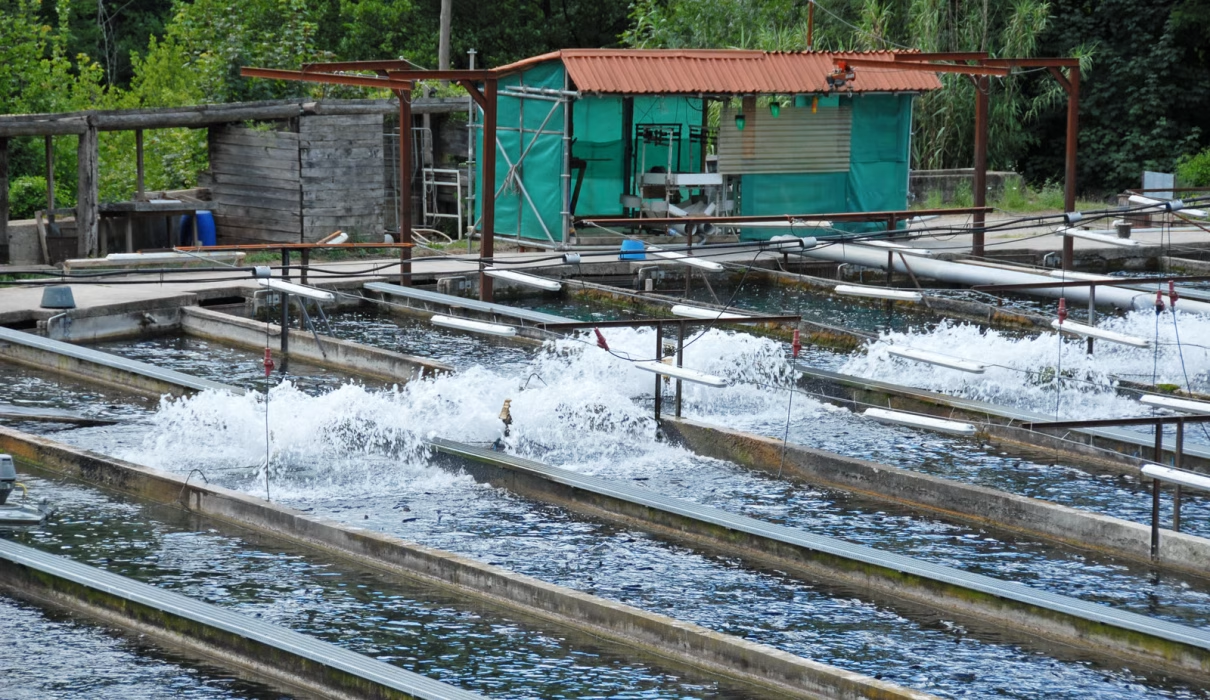
Compared to poultry farming, cattle rearing, or large-scale crop production, catfish farming requires relatively lower startup capital. Small-scale farmers can begin with tarpaulin ponds, plastic tanks, or concrete ponds, gradually expanding as profits grow.
This low barrier to entry makes catfish farming accessible to young entrepreneurs, students, and side-hustlers. While larger operations require more capital, small-scale systems can still generate consistent profits when properly managed. That said, beginners often underestimate costs related to feed, water management, pond maintenance, and fingerlings. While entry costs are moderate, long-term success depends on careful budgeting and financial planning.
4. High Profit Margins with Proper Management
Catfish farming offers impressive profit margins when best practices are followed. Feed is typically the largest operational cost, but when feeding schedules, water quality, and stocking densities are properly managed, output significantly outweighs expenses.
For example, farms such as Mordecai Farms have demonstrated how proper pond design, feeding systems, and stock monitoring lead to higher yields, lower mortality rates, and healthier fish. This structured approach transforms catfish farming from trial-and-error into a profitable production system. Entrepreneurs can further boost profits by adding value through smoking, packaging, and branded distribution. Selling smoked catfish directly to retailers or consumers often generates higher margins than raw fish sales alone.
5. Strong Support from Government, NGOs, and Agribusiness Programs
The Ghanaian government and private sector have increasingly provided support to catfish farmers. Training programs, subsidies, and access to loans make it easier to start and scale operations. Networks like agricultural forums also allow farmers to share knowledge and resources.
Even with support, challenges like fluctuating feed prices and water management remain. Experienced farmers recommend staying informed about industry trends and local market needs to navigate these effectively.
6. Scalability and Long-Term Business Growth Potential
Catfish farming is not limited to small backyard ponds. With time, consistency, and reinvestment, operations can expand into commercial-scale farms supplying hotels, food chains, supermarkets, and export markets.
Beyond raw production, entrepreneurs can explore opportunities in hatchery operations, feed production, fish processing, cold storage services, logistics distribution, and digital fish marketplaces. These extensions turn catfish farming into a full agribusiness ecosystem rather than a single income stream.
However, scalability requires discipline, data tracking, market research, and financial management. Farmers who scale too quickly without strong operational systems often face losses due to disease outbreaks, water quality problems, and rising operational costs.
To conclude: Catfish farming in Ghana is undeniably lucrative, but it requires planning, dedication, and creative approaches. Entrepreneurs who understand market demand, invest in proper management, diversify revenue streams, and stay connected to industry networks are best positioned to succeed. While challenges exist, the combination of high demand, quick growth cycles, and multiple opportunities makes catfish farming one of the most promising agribusiness ventures in the country.