 By
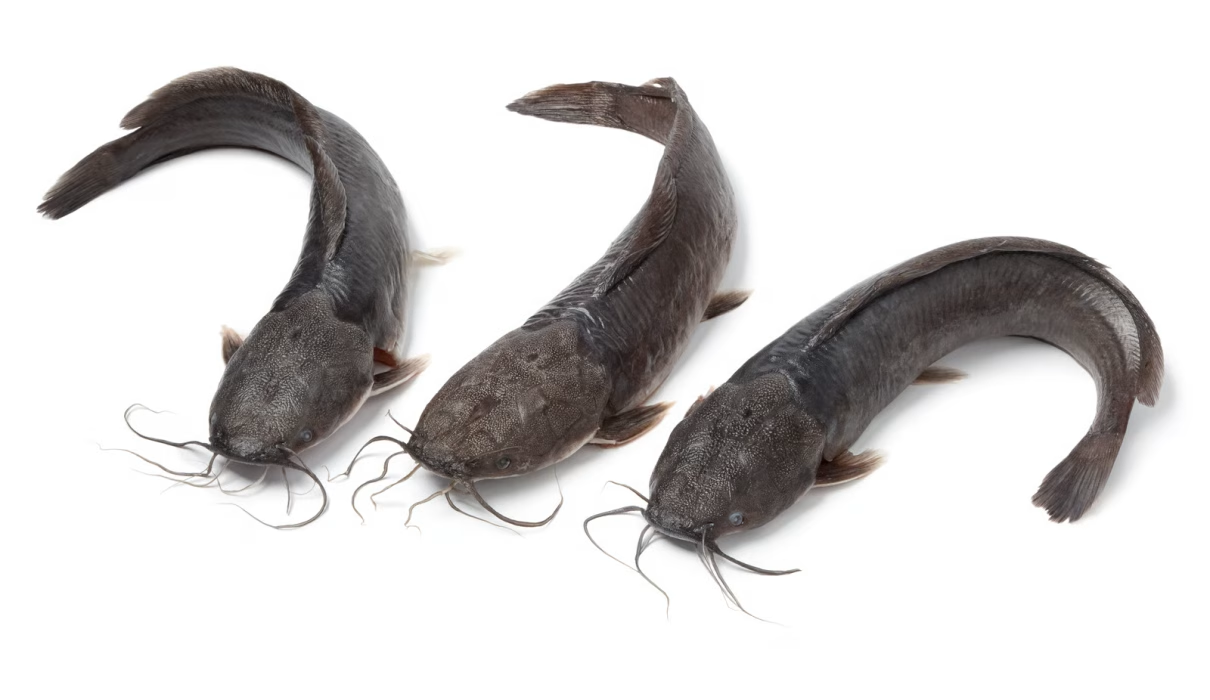
By Starting a commercial catfish farm is one of the most practical ways to enter the agricultural value chain with a scalable, high-demand product. Catfish is affordable, widely consumed, and adaptable to different production systems, making catfish farming an attractive business option for both beginners and experienced entrepreneurs.
However, building a sustainable fish farming business goes beyond digging ponds and stocking fingerlings. It’s success depends on thoughtful planning, disciplined management, and intelligent use of local products to control cost, improve margins, and ensure long-term profitability.
1. Start With Market Reality, Not Assumptions
Before investing in a commercial catfish farm, understand the demand patterns in your target market. Catfish demand remains strong throughout the year, but pricing fluctuates based on season, supply volume, and festive demand cycles. Effective catfish farming begins with studying how fish moves from farms to consumers and identifying where you best fit within that value chain. Overproduction without secured distribution often leads to forced sales at reduced prices, which strains cash flow and weakens sustainability in any fish farming business.
2. Choose a Farming System That Matches Your Resources
Selecting the right farming system is central to the success of your commercial catfish farm. Earthen ponds, concrete tanks, tarpaulin tanks, and biofloc systems all support catfish farming, but each comes with different cost structures and management demands.
Many farmers reduce capital strain by integrating local products such as wood ash filtration, natural water clarifiers, and locally fabricated pond liners. These adjustments preserve performance while keeping overhead manageable. The goal is operational efficiency, not aesthetic perfection.
3. Source Quality Fingerlings and Water
Strong production begins with healthy stock. Sourcing robust fingerlings improves survival rates and growth consistency in catfish farming. Poor-quality stock introduces early mortality risks that compromise the entire production cycle of a fish farming business.
Equally important is water quality. Reliable, clean water is non-negotiable for any commercial catfish farm. Where treated water is unavailable, natural filtration systems using sand, gravel, and charcoal — readily accessible local products — help maintain optimal water parameters.
4. Feed Strategically to Control Costs
Feed constitutes the highest operating expense in catfish farming. While commercial pellets ensure rapid growth, blending them with nutritionally balanced formulations derived from local products significantly reduces cost per kilogram of fish produced. We’ve seen farmers integrate fermented feed formulas, insect protein cultures, and agricultural by-products to support growth cycles. Strategic feeding directly improves cash flow in a fish farming business while maintaining healthy stock development in a commercial catfish farm.
5. Apply Strong Farm Management Systems
Operational discipline separates profitable farms from struggling ones. Consistent water testing, feeding schedules, growth tracking, and mortality monitoring form the backbone of efficient catfish farming.
Even small operational adjustments — like automated aeration using locally assembled components — can improve oxygen levels and growth rates. Such systems, built with accessible local products, improve productivity without inflating capital costs.
6. Plan Distribution Before Harvest
A sustainable commercial catfish farm requires established market channels long before harvest. Restaurants, hotels, frozen food retailers, and bulk distributors form reliable demand pipelines for a structured fish farming business.
Farmers who align production cycles with supply contracts stabilize pricing, reduce post-harvest losses, and strengthen revenue predictability. Strategic partnerships also enable volume-based bargaining, improving profitability in catfish farming operations.
7. Prepare for Real-World Challenges
While lucrative, catfish farming faces challenges such as disease outbreaks, feed price fluctuations, and water quality disruptions. These realities require contingency planning, reserve capital, and continuous learning.
Farmers who adapt quickly, experiment responsibly with local products, and maintain disciplined production records consistently outperform those who rely on guesswork. Long-term sustainability in any fish farming business depends on operational flexibility and informed decision-making.Starting a commercial catfish farm using local products offers a practical pathway into profitable agribusiness. When grounded in data, discipline, and market awareness, catfish farming becomes a scalable, resilient enterprise rather than a seasonal hustle.