 By
By Greenhouse farming is gaining ground as more growers look for predictable yields, better quality control, and stronger margins. In warm climates with fluctuating rainfall and rising input costs, a controlled structure offers stability that open-field production cannot always guarantee. For growers considering a vegetable greenhouse, crop selection determines whether the investment delivers consistent returns or becomes an expensive experiment.
A well-managed greenhouse in Ghana allows year-round production, protection from heavy rains, and improved pest control. According to the FAO and World Bank agriculture data, protected cultivation can increase yields significantly compared to open-field vegetable farming when climate and irrigation are properly managed. The key is choosing greenhouse vegetables that respond well to controlled environments and have reliable market demand.
1. Tomatoes (High Demand, High Turnover)
Tomatoes remain one of the most profitable greenhouse vegetables because demand is steady across households, restaurants, and food processors. In a vegetable greenhouse, tomatoes benefit from controlled irrigation, staking systems, and reduced disease pressure during heavy rains. Yields per square meter in greenhouse farming systems are often significantly higher than open-field production.
For greenhouse farming in Ghana, hybrid indeterminate tomato varieties perform well under warm conditions with proper ventilation.
2. Sweet Peppers (Premium Market Value)
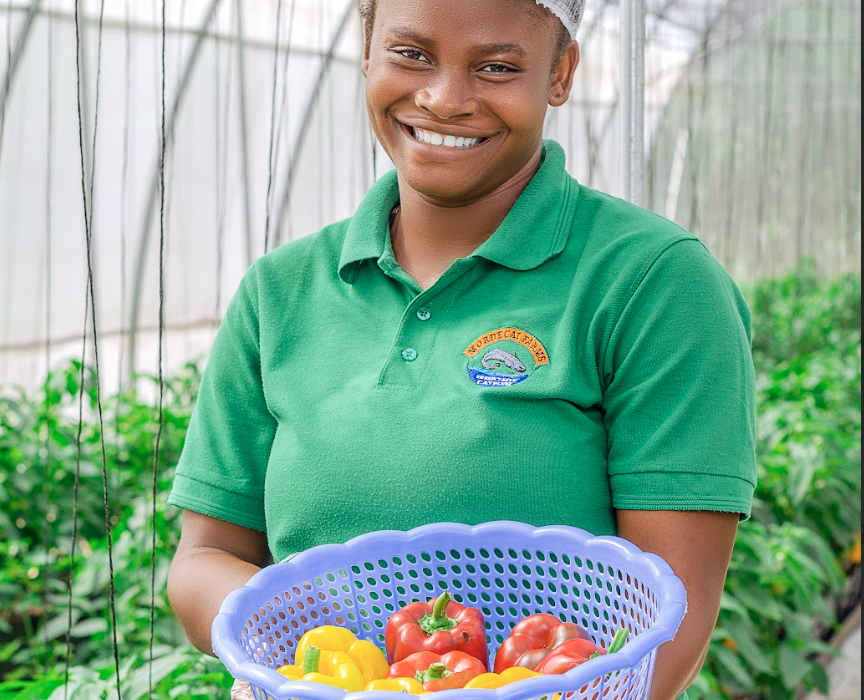
For growers targeting structured buyers, peppers perform consistently inside a well-managed greenhouse in Ghana. Sweet peppers thrive in stable temperatures, making them ideal for greenhouse vegetables production.
They require careful nutrient management but reward growers with premium pricing, especially from supermarkets and hospitality businesses. A vegetable greenhouse reduces the risk of bacterial wilt and excessive rainfall damage common in open vegetable farming. In greenhouse farming in Ghana, colored pepper varieties (red, yellow, orange) often command higher margins than green peppers.
3. Lettuce (Fast Growth Cycle)
Lettuce is one of the most beginner-friendly greenhouse vegetables due to its short production cycle. In controlled greenhouse farming conditions, growers can harvest within 4–6 weeks depending on the variety. A vegetable greenhouse focused on leafy greens can generate steady weekly revenue with minimal downtime.
So if you’re considering greenhouse farming in Ghana, lettuce performs well when humidity and airflow are balanced. Its quick turnover supports frequent harvesting, making it suitable for small-scale vegetable farming businesses supplying urban markets.
4. Cucumbers (Strong Urban Demand)
Greenhouse farming in Ghana allows growers to avoid heavy rainfall damage that often affects open vegetable farming. With consistent grading and packaging, cucumbers from a vegetable greenhouse can access retail and hospitality supply chains more easily. They respond well to trellising systems commonly used in greenhouse farming. Inside a greenhouse in Ghana, cucumbers benefit from reduced pest exposure and controlled watering, which improves fruit quality and size uniformity.
5. Spinach and Leafy Greens (Low Risk Entry Crop)
Spinach and similar leafy greenhouse vegetables are practical for growers starting greenhouse farming operations. They require less structural support than fruiting crops and adapt quickly to controlled environments.
In greenhouse farming in Ghana, leafy crops help maintain production continuity between major harvest cycles. Because vegetable farming margins depend on volume and freshness, greens grown in a greenhouse in Ghana often attract repeat buyers seeking consistent supply.
6. Bell Peppers (High-Value Export and Retail Crop)
Bell peppers perform exceptionally well under greenhouse farming due to their sensitivity to excessive rainfall and temperature swings. A vegetable greenhouse provides the stable conditions needed for uniform fruit size, color development, and longer harvesting windows.
They offer strong profit potential in both domestic retail and premium markets. Compared to open vegetable farming, production inside a greenhouse in Ghana improves quality consistency and reduces weather-related losses. As part of a protected cultivation strategy, bell peppers can significantly increase revenue per square meter when managed with proper nutrient and irrigation systems.
Crop profitability in greenhouse farming depends on three factors: market access, input management, and consistency. A greenhouse in Ghana does not guarantee profit on its own; the structure must support crops with proven demand and efficient production cycles. Selecting the right greenhouse vegetables allows growers to balance risk, stabilize income, and scale vegetable farming strategically.